Last updated 11/26/2026
Blog key takeaways
-
Location intelligence combines geographic data (GIS) with business data to show where opportunity is.
-
Its most common use is site selection and sales forecasting for new locations.
-
It also supports portfolio decisions: relocations, closures, remodels, and the impact of one store on another.
-
Retail, restaurant, fuel, convenience, grocery, healthcare, and private equity teams all use it.
What is location intelligence?
Location intelligence is the practice of analyzing data tied to specific places, such as customers, competitors, demographics, and traffic, to decide where to open, close, relocate, or invest. It typically draws on geographic information systems (GIS) and digital mapping tools to collect, organize, and analyze information based on where things are in the real world.
Kalibrate Location Intelligence (KLI) is a location intelligence platform that retail, restaurant, convenience, fuel, grocery, and healthcare brands use for site selection, sales forecasting, and portfolio planning.
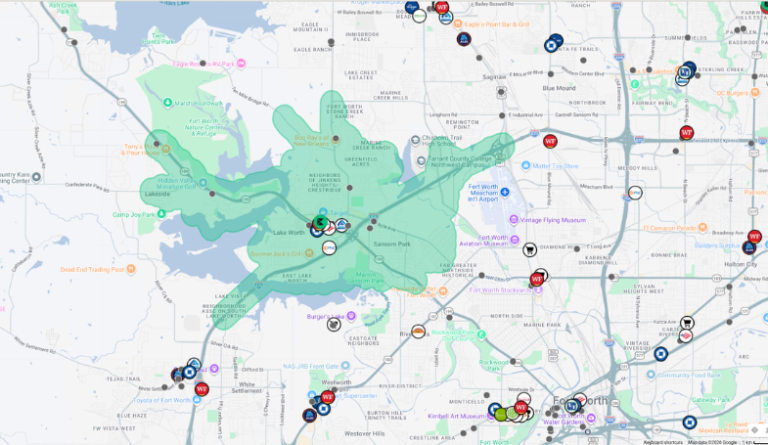
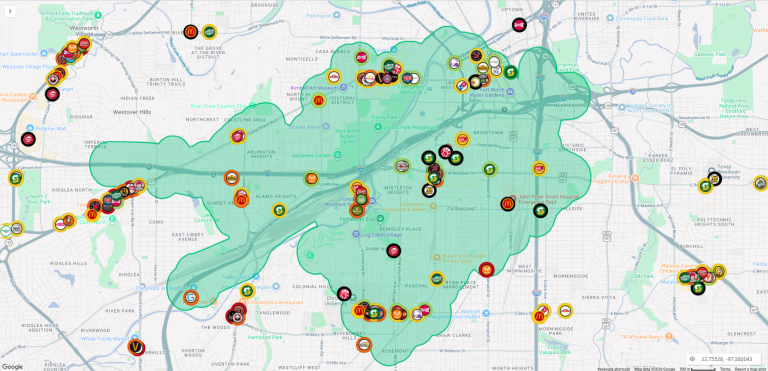
Putting this data on a map makes patterns, trends, and connections easy to spot that might not be clear in tables or reports. Businesses use those insights to decide where to open new locations, how to improve operations, and where to focus marketing efforts.
How does location intelligence work?
Location intelligence software works in four steps:
-
Bring data together. It combines first-party data, such as sales, customer, and store data, with third-party data, such as demographics, traffic, and mobile movement data.
-
Organize it around place. Every data point is tied to a location, so different sources can be compared on the same map.
-
Analyze and model. The software measures trade areas, competitors, and customer profiles, and builds forecasting models that project how a proposed or existing location is likely to perform.
-
Share the results. Real estate, finance, marketing, and operations teams all work from the same analysis, including maps, reports, and committee packages.
What is the difference between location intelligence and GIS?
GIS is the underlying technology for storing, mapping, and analyzing geographic data. Location intelligence applies that technology to business decisions. It adds business data, such as sales and customer data, along with forecasting and portfolio analysis, so a team can answer questions like “Which site should we open next?” and not just “Where is it on the map?”
What is location intelligence used for?
The most fundamental use of location intelligence is helping a brand select locations that are likely to perform well. Forecasting models draw on data about customers, locations, competitors, and local conditions to project how a proposed location will perform.
By bringing separate data sources together around place, location intelligence also gives a deeper understanding of geographic areas: how they are today, how they were in the past, how they are likely to change, and what that means for your business.
Who uses location intelligence software?
Decision makers across many industries use location intelligence. Data analysts, real estate managers, IT teams, executives, marketers, charities, and government bodies use location intelligence software to understand their environment, spend capital effectively, and reach their strategic objectives.
Which industries use location intelligence?
Retail, restaurant, convenience, fuel, grocery, service, healthcare, and private equity organizations all use location intelligence to decide where to locate, how to manage the sites they already have, and where to grow next. KLI supports each of them with site forecasting, market planning, and portfolio management.
-
Retail: Forecast sales for proposed stores, measure the impact on nearby existing stores, and decide which locations to open, remodel, relocate, or close.
-
Fuel: Evaluate each site against its local competitors and respond quickly when the competitive picture changes, such as a new station opening nearby.
-
Convenience: Understand the customers, traffic, and competitors around each store so new and existing sites are judged against what the local market actually needs.
-
Grocery: Match store locations to local shopping patterns and accessibility, and identify underserved markets.
-
Restaurant: QSR, fast-casual, and fine dining brands use KLI to forecast new-unit performance, find whitespace, and plan territories.
-
Service retail: Automotive centers, gyms, salons, and other service businesses use trade area analysis to see where demand supports a new location.
-
Healthcare: Providers use location data to choose where to place facilities and to understand where patients live and travel from, which supports patient acquisition and retention.
-
Private equity: Investors and their portfolio companies use Kalibrate to identify whitespace, forecast sales, and optimize portfolios before and after an acquisition.
How do retailers use location intelligence to make decisions?
Retailers use location intelligence software, or work with location analytics consultants, to support decisions across the business:
-
Real estate management: Choose new sites, evaluate relocations and closures, and build the case for real estate committee review.
-
Marketing strategies: Identify where target customers live and shop, and focus spend on the markets that matter most.
-
Pricing strategies: Set prices with the local competitive set in mind rather than using a single chain-wide approach.
-
Merger and acquisition analysis: Compare the footprints of two networks to find overlap, gaps, and potential divestitures.
-
Operations: Understand how site characteristics and local demand affect store performance.
-
Distribution and fulfillment: Plan delivery areas and supply routes around where customers are.
-
Competitive impacts: Measure how a competitor opening, closing, or remodeling affects your sites.
-
Human resources and talent acquisition: Understand where the available workforce is when planning new locations.
Why should organizations invest in location intelligence?
Organizations that invest in location intelligence make location decisions with evidence instead of instinct. The main benefits are:
-
Lower risk: Forecast a site’s potential before committing capital, and avoid locations unlikely to perform.
-
More focused spending: Prioritize the markets and sites with the highest potential, whether the decision is new stores, remodels, or marketing.
-
A current view of customers and markets: Track how customers, competitors, and local conditions change over time, so your portfolio keeps up.
-
One source of truth: Bring first-party and third-party data into a single platform, so real estate, finance, marketing, operations, and executive teams work from the same numbers and the same targets.
How is AI changing location intelligence?
AI is making location analysis faster to run and easier to use. Teams can get answers from their data without building every analysis by hand. In KLI, k.ai Companion brings AI assistance into the platform. The underlying data and forecasting models still determine how reliable the answers are, so AI helps most when the location data behind it is accurate and well organized.
The bottom line
Location intelligence connects data about places to the decisions that depend on them, from where to open the next store to which existing locations need attention. Kalibrate Location Intelligence (KLI) brings that analysis into one platform for retail, restaurant, convenience, fuel, grocery, healthcare, and franchise organizations. To see how it works for your business, request a demo.