For decades, the basic logic of the gas station was straightforward: motorists needed fuel, so they stopped at a gas station, and while they were there, some went inside to buy a drink, snack, newspaper, or other convenience item. Fuel generated the visit, while the convenience store provided an opportunity to capture additional spend.
That relationship is changing as fuel retailers invest in larger stores, better foodservice, branded QSRs, coffee, car washes, loyalty programs, and a much broader range of services. The forecourt remains critical, but increasingly it is one component of a diverse retail proposition in which the quality of the convenience offer influences which gas station a customer chooses in the first place.
For some customers, the question is becoming less about where they should stop for fuel and more about where they actually want to stop. That distinction could have significant implications for the way fuel retailers plan, develop, and optimize their networks.
From necessary stop to chosen destination
Fuel is unusual as a retail category because demand is largely functional. Drivers eventually need to refill their vehicles, and historically that requirement has been one of the strongest drivers of visits. The convenience store could capitalize on that traffic, but it didn’t necessarily have to create it.
Today’s strongest convenience propositions are challenging that model. Fresh food, made-to-order meals, high-quality coffee, recognizable QSR brands, attractive stores, and ancillary services can all provide additional reasons to select one location over another. Instead of simply converting fuel customers into store customers, retailers have an opportunity to use convenience to influence where the fuel purchase happens in the first place.
This makes the relationship between the forecourt and store increasingly two-way. Fuel can continue to generate convenience sales, but a strong convenience proposition can also help attract customers to the site and support fuel volume.
Foodservice is changing the competitive landscape
Perhaps nowhere is this shift clearer than foodservice, which has become an increasingly important component of the fuel and convenience proposition. For retailers, its value goes beyond creating another revenue stream because a strong food offer can provide customers with an additional reason to choose a particular location.
That matters in a category where competing fuel sites can otherwise look relatively similar to motorists. If two locations offer comparable access, fuel, and pricing, the availability of a preferred coffee, fresh-food, or QSR offer can become an important differentiator, particularly when customers are combining several needs into a single stop.
It also broadens the competitive landscape. Depending on the customer mission, a fuel retailer may not simply be competing against the gas station across the road, but against nearby coffee shops, fast-food restaurants, supermarkets, and other convenience destinations. Kalibrate’s market surveys reflect this diversification by capturing characteristics including QSR brand, bakery, to-order deli, car wash, c-store size, and other attributes alongside traditional fuel metrics.
The result is a roadside retail environment in which the modern forecourt increasingly needs to be understood as a complete retail destination rather than simply a place that sells fuel.
Bigger isn’t automatically better
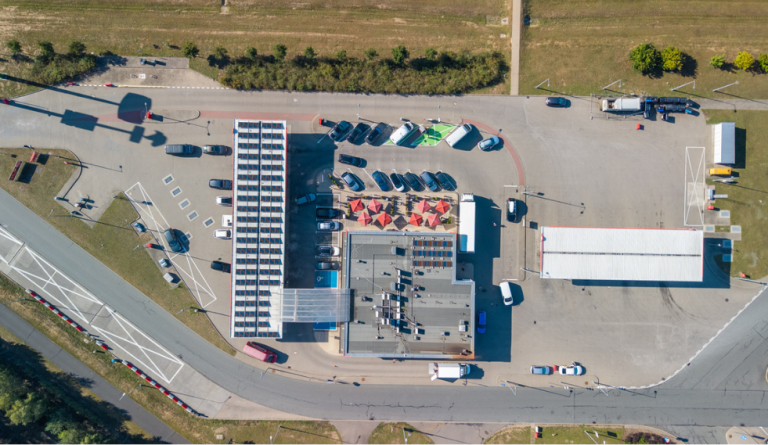
One response to this evolution has been the development of increasingly ambitious convenience destinations, with larger stores, extensive foodservice, more fueling positions, significant parking, and broader merchandise ranges. At the extreme end, some operators have demonstrated just how far the traditional gas station format can be stretched toward destination retail.
That does not mean every site should become bigger. A large store in the wrong trade area can simply create additional capital cost and operating overhead, while adding more pumps, a QSR, car wash, or other facilities without sufficient local demand leaves expensive assets underutilized.
The more complex fuel and convenience sites become, the more important it becomes to understand what individual markets can actually support. Decisions about pump numbers, QSR, c-store, car wash, and other facilities should reflect the characteristics and potential of the individual location rather than simply applying a standard forecourt template across the network.
The future may therefore be characterized by greater format differentiation rather than simply bigger gas stations, with retailers developing different propositions around the needs of different markets.
One network, multiple customer missions
Consider two locations belonging to the same retailer. One sits alongside a major commuter route where customers value speed, easy access, sufficient fueling capacity, and the ability to pick up coffee or breakfast quickly, while another serves a growing suburban community where customers may be more receptive to a larger convenience store, extensive fresh food, a QSR, car wash, and other services.
Applying exactly the same format to both sites ignores the reasons customers are visiting them. Location, traffic, demographics, competition, and customer behavior all influence what a site should become, meaning even two physically similar locations can have very different commercial opportunities because their surrounding markets and customer missions are different.
This is why network planning increasingly needs to extend beyond deciding where to operate. Retailers also need to determine what should operate at each location and how the proposition should change according to the opportunity available.
The store can strengthen the forecourt
This becomes particularly interesting when retailers evaluate their existing networks. A fuel location may occupy excellent underlying real estate but still underperform, because strong traffic, good access, and substantial local demand do not automatically translate into strong volume if the overall proposition is not competitive.
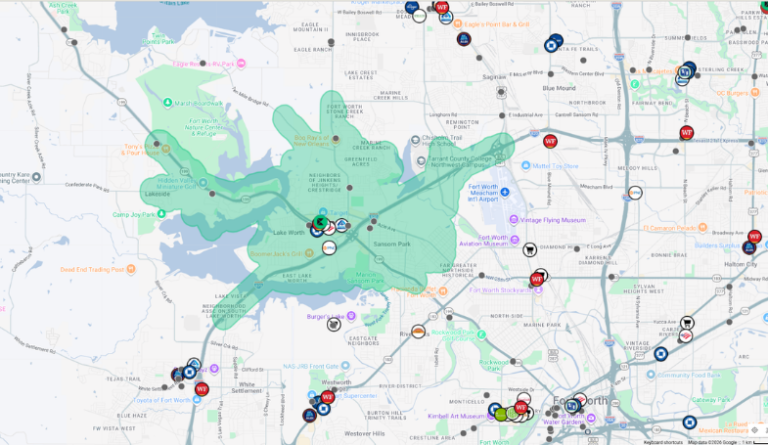
Frameworks such as Kalibrate’s Potential Performance Quadrant analysis provides one way of thinking about this problem by separating actual site performance from underlying location potential. High-potential, low-performance sites are particularly interesting because the location itself may not be the problem; instead, the performance gap may point toward weaknesses elsewhere in the proposition.
The store may be too small, the food offer may be weak compared with nearby competitors, the facilities may be dated, or another retailer may simply have created a more compelling reason for customers to stop. Improving convenience in these circumstances can therefore be more than an attempt to increase inside sales. By strengthening the overall proposition, retailers may also improve the site’s ability to compete for the fuel purchase.
This is why the forecourt and convenience store should not necessarily be optimized independently. What happens inside the store can influence performance outside it, just as fuel traffic continues to provide a valuable source of customers for the store.
Destination retail changes the value of location
There is an interesting implication here for traditional thinking about location. Great real estate will always matter, with access, visibility, traffic, and local demand remaining fundamental drivers of fuel retail performance, but a stronger destination offer can potentially influence the distance customers are prepared to travel or the locations they consider during a journey.
Rather than making location less important, this makes understanding customer behavior around a location even more valuable. Retailers need to distinguish between convenience-led visits, where the customer wants the easiest possible fuel stop along an existing journey, and more destination-led visits, where customers actively choose a particular location because of its food, coffee, retail, or other offer.
Understanding that distinction can help determine where additional investment is justified and where a simpler, more efficient format remains the better commercial proposition. The objective is not to turn every gas station into a destination, but to understand where destination characteristics can create additional value.
A different way to think about network planning
This evolution also broadens the role of the fuel network planner. Historically, one of the central questions was where a retailer could sell the most fuel, but that question is increasingly accompanied by a wider consideration of what type of store a market can support, which services could create incremental visits, whether there is enough demand for a QSR or car wash, how large the c-store should be, how many fueling positions are required, and what competitors are already offering.
These decisions are interconnected. A location with significant underlying demand might still fail to achieve its potential if the store is undersized, while another could be overdeveloped for the opportunity available. A QSR that strengthens one location could add unnecessary complexity at another, just as additional fueling positions only create value where there is enough demand to utilize them.
Effective network planning therefore becomes less about applying a standard format and more about building the right proposition around the potential of each location.
Fuel isn’t disappearing from the equation
None of this means fuel is suddenly secondary. For most conventional gas stations, fuel remains fundamental to traffic, revenue, and site economics, while the recurring need to refuel provides retailers with something many other retail formats would value highly: a regular reason for customers to return.
The opportunity is to do more with that advantage by treating the forecourt and store as one proposition rather than two separate businesses. Fuel can provide frequency, utility, and an established customer mission, while convenience, foodservice, and ancillary services provide differentiation and additional reasons to select one location over another.
As roadside retail continues to evolve, the strongest operators may increasingly be those that understand how these components reinforce each other rather than assuming the convenience store simply exists to monetize traffic generated by the pumps.
Build destinations, not just forecourts
The future gas station is not necessarily the biggest site, the location with the largest store, or the forecourt offering the greatest number of additional services. It is the site that best matches the needs of its market, its customers, and the journeys taking place around it.
In some locations, that could mean an expansive convenience destination built around foodservice and multiple customer missions. Elsewhere, it could mean an efficient forecourt and compact store designed around speed and accessibility. The important change is that retailers have an opportunity to think about the entire site as a single proposition and determine the role that each component should play.
For decades, convenience stores largely benefited from customers who had already decided to stop for fuel. Increasingly, a strong convenience proposition can influence that decision itself.
Fuel still gives motorists a reason to stop, but convenience is becoming a bigger part of deciding where they stop.