The release of the 2025 National Retail Petroleum Site Census provides a clear picture of how Canada’s fuel retail landscape is evolving. For fuel network planners, the findings highlight a market that is becoming leaner, more competitive, and increasingly dependent on non-fuel revenue streams.
The message is clear: traditional approaches to network growth and optimization may no longer be enough.
The lowest site count, but a stable market
Canada finished 2025 with 11,465 retail gasoline stations, a decline of 146 sites from the previous year and the lowest national site count recorded since tracking began in the late 1980s. However, the more important finding is not the decline itself.
After decades of rationalization, the rate of site closures has slowed dramatically. The national network has remained relatively stable for more than a decade, suggesting that many of the weakest locations have already exited the market. The industry is no longer experiencing widespread consolidation. Instead, it is entering a phase of ongoing optimization.
For network planners, this changes the nature of decision-making. The opportunity is increasingly about improving existing assets rather than simply reducing site counts.
Throughput remains a critical performance indicator
The census reports average annual throughput of 3.72 million litres per site, an increase of 4.5% compared to 2024. While encouraging, average throughput remains below pre-pandemic levels. Factors including improved fuel economy, changing commuting habits, remote work, and gradual electric vehicle adoption continue to influence fuel demand.
This creates a challenge for planners.
Sites that were historically viable may face increasing pressure if future demand growth slows. Understanding which locations possess genuine long-term potential becomes more important than simply reviewing current volume performance.
The strongest networks will be those that can distinguish between sites that are temporarily underperforming and sites whose markets have fundamentally changed.
The competitive landscape is becoming more complex
One of the most striking findings in the census is the continued shift away from traditional vertically integrated fuel retailing.
Only 22% of Canadian stations are now price-controlled by integrated refiner-marketers. The remaining 78% are controlled by dealers, distributors, and non-refining marketers. Meanwhile, 39% of stations are operated by companies selling a brand they do not own.
For network planners, this means competitor analysis has become significantly more complicated.
A Shell, Esso, or Petro-Canada canopy no longer necessarily indicates who controls pricing, investment decisions, or site operations. Understanding ownership structures, distributor relationships, and local market dynamics is becoming just as important as understanding brand presence.
Simply counting competitor sites is no longer enough.
Non-traditional operators continue to gain influence
The census found that more than 3,100 Canadian fuel sites are operated by companies whose primary business is not petroleum. These operators now account for 27.1% of all stations nationwide.
This trend has significant implications for network planning.
Retailers connected to grocery chains, convenience operators, and large-format retail businesses leverage loyalty programs, cross-promotions, and broader retail ecosystems that traditional fuel-focused operators may struggle to match.
As a result, planners increasingly need to evaluate markets through a broader retail lens. The competitive threat may not come from another fuel brand alone. It may come from a retailer with a stronger convenience proposition, a larger loyalty ecosystem, or a more integrated customer offer.
Fuel is no longer the whole business
Perhaps the most important takeaway from the census is the continued evolution of the gas station itself.
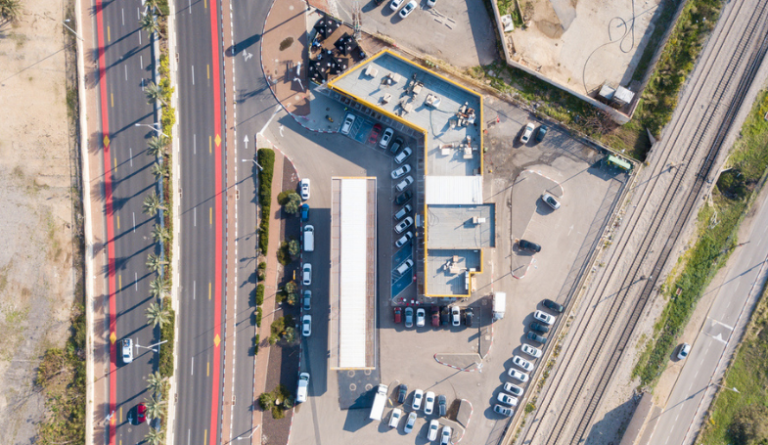
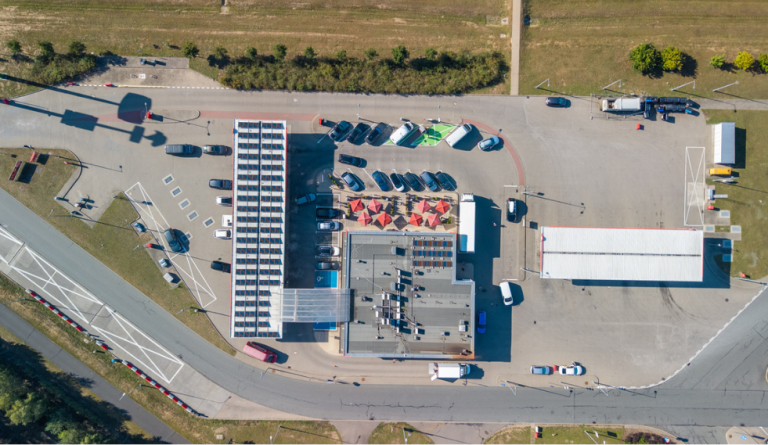
The report shows clear growth in larger convenience stores, quick-service restaurants, car washes, loyalty programs, and electric vehicle charging infrastructure. Nearly two-thirds of Canadian fuel sites now feature convenience stores larger than 500 square feet. Quick-service restaurant representation has more than doubled over the last two decades, while car washes continue to grow steadily. Loyalty programs are now present at 79% of Canadian sites.
These trends reflect a simple reality.
Fuel margins remain thin, and retailers increasingly rely on higher-margin ancillary services to drive profitability. The modern fuel site is evolving from a fueling location into a multi-purpose retail destination.
For planners, this means site evaluation should increasingly consider the potential for foodservice, convenience retail, loyalty engagement, and other non-fuel offers alongside traditional fuel demand.
Electric vehicles remain a long-term consideration
Electric vehicle charging continues to expand, with 556 Canadian gas stations now offering charging facilities. However, the census also highlights the continued dominance of traditional vehicles.
While 9.5% of new vehicle registrations in 2025 were zero-emission vehicles, nearly eight gasoline vehicles were sold for every EV.
The implication for network planners is that EV infrastructure should be viewed as a complementary opportunity rather than an immediate replacement for fuel demand.
The more immediate question is not whether EVs will replace fuel volumes overnight, but how charging can support broader site economics through convenience retail, foodservice, and extended customer dwell time.
The future belongs to optimized networks
The 2025 Fuel Census paints a picture of an industry that is becoming increasingly sophisticated.
Network growth is slowing. Competition is becoming more complex. Ownership structures are evolving. Non-fuel revenue is becoming more important. Customer expectations continue to rise.
For fuel network planners, success will depend less on finding the next available location and more on understanding which sites have the greatest long-term potential, which markets deserve investment, and which offers will drive future performance.
The era of network expansion alone is giving way to the era of network optimization.
And according to the latest census, the retailers that adapt fastest to that reality will be best positioned for the decade ahead.
Contact our team to purchase a copy of the census.