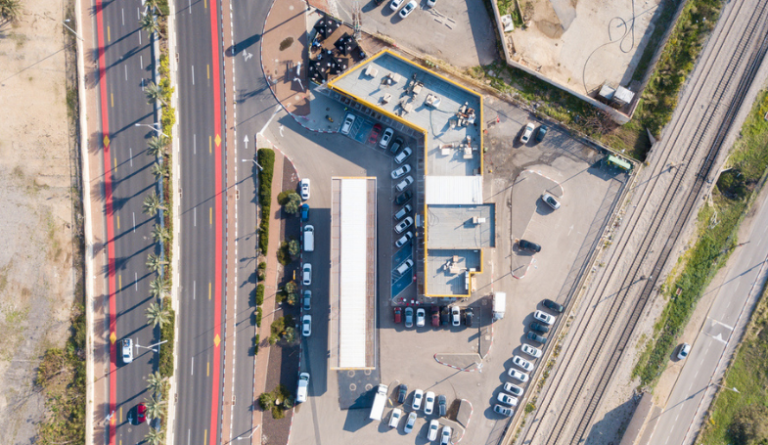
For fuel retailers, growth has traditionally been associated with expansion. More gas stations, more markets, and a larger network footprint. But adding sites doesn’t automatically translate into greater market share, higher fuel volumes, or improved profitability. In fact, poorly planned expansion can dilute existing sales, increase operating costs, and tie up capital in locations that never achieve their expected returns.
The most successful fuel networks aren’t necessarily the largest. They’re the ones that understand where demand exists, how customers behave, what drives competitor performance, and where investment will generate the greatest return.
This is where location analytics becomes essential. By combining detailed fuel market data, geographic intelligence, competitive analysis, and predictive modeling, retailers can move beyond assumptions to make evidence-based decisions about where to grow, which sites to improve, and how to maximize the performance of their existing assets.
In this guide, we explore how location analytics works, the data that makes it valuable, and how fuel retailers can use it to build more profitable and resilient networks.
What is location analytics in fuel retail?
Location analytics is the process of combining geographic, demographic, market, and operational data to understand how location influences business performance. For fuel retailers, it provides a framework for evaluating the potential of individual gas stations, understanding competitive dynamics, and identifying opportunities across an entire retail network.
At its simplest, location analytics helps answer a fundamental question: Is this the right place to invest?
However, effective location analytics goes considerably further than identifying a busy intersection or an underserved neighborhood. It examines the relationship between customer demand, traffic patterns, competitor locations, site characteristics, and consumer preferences to understand how much fuel and convenience revenue a particular location could generate.
It also distinguishes between a site’s current performance and its underlying potential. A gas station selling relatively low volumes may occupy an excellent location but suffer from inadequate facilities, poor operations, or an uncompetitive retail offer. Conversely, a high-performing site may be operating beyond what its location would normally support, leaving it vulnerable to stronger competition.
Understanding these differences is critical because the actions required to improve performance vary significantly. Some locations justify substantial capital investment, while others may offer limited opportunities for profitable growth regardless of how much is spent.
Why location analytics matters more than ever
Fuel retail has become increasingly complex. Retailers must manage changing consumer expectations, competitive pressure, rising development costs, and the growing importance of non-fuel revenue. At the same time, network planning teams are expected to deliver stronger returns from capital investments while managing uncertainty about future demand.
Historically, location decisions have often relied on a combination of local knowledge, traffic counts, competitor observations, and experience. These remain valuable inputs, but they don’t always provide the complete picture required for major investment decisions.
Two gas stations on the same road can achieve dramatically different sales volumes. One may benefit from easier access, stronger visibility, a more recognizable brand, or a convenience proposition that attracts customers independently of fuel. The other may struggle despite being exposed to similar traffic.
Location analytics makes these differences measurable. It enables retailers to understand not only where customers are, but why they choose particular sites and how changes to the competitive environment might influence their behavior.
For senior decision-makers, this translates into three important advantages: better capital allocation, reduced investment risk, and a clearer understanding of where incremental growth can be achieved.
The data behind effective fuel location analytics
The quality of any location analysis depends on the quality and relevance of the underlying data. While many location intelligence tools use demographics, mobility information, and traffic counts, fuel retail requires a more specialized understanding of the factors that influence customer behavior.
A comprehensive fuel market dataset should bring together several layers of information.
The greatest value comes from combining these datasets rather than evaluating them independently.
For example, a high traffic count might initially suggest an attractive development opportunity. However, if the site is difficult to access from the dominant direction of travel, its achievable volume could be considerably lower than expected. Similarly, a neighborhood with strong population growth may offer limited additional fuel demand if established competitors already capture most of the available market.
Detailed, site-level intelligence makes it possible to account for these variables and build more realistic forecasts.
1. Identify the best locations for new gas stations
One of the most established applications of location analytics is new-to-industry site selection. Developing a gas station requires significant upfront investment, and mistakes made during site selection can be difficult, expensive, or impossible to correct.
The challenge is to identify locations with sufficient demand to support profitable operations while accounting for the competitive environment and the impact on the retailer’s existing network.
Location analytics enables planners to evaluate potential sites using consistent criteria. Rather than relying exclusively on available real estate opportunities, retailers can identify the strongest locations across a market and prioritize those worth pursuing.
This process is often described as whitespace analysis, where planners look for geographic areas in which customer demand is not being adequately served by the existing network.
However, whitespace should not simply be interpreted as an area without gas stations. A location may have relatively few competitors because demand is insufficient to support additional supply. Conversely, a densely populated market with numerous established retailers may still contain attractive opportunities where demand is growing or existing sites are poorly positioned.
Predictive analytics can take this further by simulating potential new sites at different intersections, forecasting achievable fuel volumes, and ranking locations according to their commercial attractiveness.
This allows development teams to focus their resources on opportunities with the greatest potential before committing to land acquisition, planning applications, or construction.
2. Forecast fuel volume and site profitability
Identifying an attractive location is only the beginning. Before investing, retailers need to understand what that location could realistically deliver.
Fuel volume forecasting uses historical market performance, site characteristics, competitive conditions, and customer demand to estimate future sales. More sophisticated models can account for the relationship between these variables, recognizing that the same site may perform differently depending on its brand, facilities, pricing strategy, and operations.
For example, consider a proposed gas station on a busy commuter corridor. The location may offer excellent traffic exposure, but achievable volume will also depend on the number of fueling positions, ease of access, nearby competitors, and the strength of the retailer’s proposition.
Predictive modeling enables planners to test these factors before construction. They might compare the forecast performance of a standard fuel and convenience site against a larger development with additional fueling positions, expanded foodservice, and a car wash.
The objective is not simply to maximize potential revenue. It is to identify the development configuration that delivers the strongest return relative to the capital required.
Accurate forecasting also supports more robust financial planning. Fuel volume estimates can be combined with expected margins, non-fuel revenue, development costs, and operating expenses to evaluate profitability, payback periods, and investment risk.
3. Understand your competitive position
No gas station operates in isolation. Its performance is influenced by the other retailers competing for the same customers, and those competitors may have very different strengths.
A traditional fuel-focused operator may compete with a large-format convenience retailer offering fresh food, premium coffee, extensive parking, and a strong loyalty proposition. Although both sell fuel, their ability to attract customers and generate revenue can differ significantly.
Location analytics helps retailers understand these competitive relationships at both market and individual site level.
One useful measure is market effectiveness, which compares a retailer’s share of fuel volume with its share of operating sites.

A retailer with 10% of a market’s gas stations but 15% of its fuel volume has a market effectiveness score of 1.5. This indicates that its network captures more volume than would be expected from its physical footprint alone.
By contrast, a retailer with 15% of sites but only 10% of fuel volume has an effectiveness score of approximately 0.67, suggesting that its locations collectively underperform relative to their share of outlets.
These comparisons help network planners identify competitive strengths, evaluate expansion strategies, and understand whether growth is delivering genuine improvements in market position.
Crucially, they also demonstrate why adding sites is not always the best route to increasing market share. Improving the performance of existing locations can sometimes deliver greater returns with significantly less capital.
4. Unlock growth from your existing network
One of the most overlooked opportunities in fuel retail is the potential already sitting within an existing network.
Retailers frequently assess performance using sales volumes, profitability, and year-on-year growth. While these measures are essential, they don’t necessarily reveal whether a site is achieving everything its location could support.
A low-volume site might appear to be a poor investment candidate. However, if its location has strong demand, favorable access, and limited competition, there may be substantial untapped potential.
The reverse can also be true. A high-volume location might appear highly successful, but if its performance depends on aggressive pricing or a temporary lack of competition, further investment could carry considerable risk.
Potential Performance Quadrant (PPQ) analysis provides a structured way to evaluate these differences by comparing underlying location potential against actual performance.

The greatest opportunities for improvement are often sites with high location potential but low actual performance. These locations have the underlying demand to support stronger sales but may be constrained by poor facilities, inadequate merchandising, weak operations, or an uncompetitive brand proposition.
By identifying the specific factors holding back performance, retailers can target investment more effectively. Rather than applying a standardized refurbishment program across the network, they can prioritize interventions most likely to generate incremental volume.
This approach also helps identify sites where additional investment is unlikely to produce sufficient returns, supporting decisions around divestment, closure, or redeployment of capital.
5. Optimize the fuel and convenience offer
Location analytics is increasingly important beyond the forecourt. As convenience stores, foodservice, car washes, and other ancillary services become more significant contributors to site economics, understanding local customer demand is essential.
The most appropriate retail offer for a highway location may be very different from that of an urban commuter site or a neighborhood convenience destination.
A highway site serving long-distance travelers might benefit from extensive foodservice, rest facilities, and truck parking. An urban location could generate stronger returns from premium coffee, fresh food-to-go, and rapid convenience transactions. In a suburban market, a car wash or larger grocery-oriented store might provide a more compelling proposition.
The key is understanding which services customers in a particular trade area are most likely to use.
Location analytics can combine demographic information, competitive offerings, local demand, and site characteristics to evaluate these opportunities. Predictive modeling can then help estimate the incremental revenue associated with introducing new facilities or changing the existing offer.
This is particularly valuable during the development stage, when decisions about store size, parking provision, fueling positions, and forecourt layout can have long-term financial implications.
Building too much capacity can reduce returns through unnecessary capital and maintenance costs. Building too little can constrain throughput and require expensive modifications later.
The objective is to develop a site that matches the commercial potential of its location, rather than applying the same template across every market.
6. Evaluate acquisitions and market entry opportunities
Acquisition is often one of the fastest ways for fuel retailers to expand into new markets or strengthen their presence in existing ones. However, acquiring an established network introduces challenges that aren’t always visible in the seller’s financial performance.
A portfolio may contain a mixture of strong locations, underperforming assets, and sites with limited long-term potential. Understanding the difference is essential when determining an appropriate valuation and identifying opportunities for improvement.
Location analytics enables prospective buyers to assess the underlying potential of individual sites independently of their current performance.
This can reveal attractive acquisition targets that might otherwise be overlooked. For example, a poorly performing independent gas station could occupy a highly desirable location but lack the brand recognition, facilities, or operational capabilities needed to capture its available demand.
A larger retailer may be able to unlock that potential through rebranding, refurbishment, or improvements to the retail offer.
Predictive modeling allows prospective buyers to test these scenarios before completing an acquisition, estimating the potential uplift from different investment strategies.
At network level, location analytics also helps evaluate whether an acquisition will strengthen market position or simply redistribute sales between existing sites. This is especially important when considering the acquisition of a competitor operating in markets where the buyer already has a significant presence.
7. Measure cannibalization before expanding
One of the biggest risks in fuel network expansion is cannibalization, where a new or acquired site captures sales that would otherwise have gone to another location within the same network.
A new gas station might achieve an attractive individual sales forecast while delivering relatively little incremental revenue for the business overall.
For example, imagine a retailer opening a new site forecast to sell 200,000 gallons per month. If 80,000 gallons are expected to transfer from existing company-operated locations, the net incremental network volume would be only 120,000 gallons before accounting for other market effects.
This distinction can fundamentally change the investment case.
Location analytics helps quantify potential sales transfers by modeling how customers choose between competing sites and how their behavior might change when new locations enter the market.
It also supports decisions around network rationalization. If a retailer closes an underperforming site, understanding how much of its volume could transfer to nearby owned locations can help determine the financial impact.
Ultimately, the goal is not to maximize the number of sites or even the volume of an individual site. It is to maximize profitable performance across the network as a whole.
8. Use scenario modeling to make better investment decisions
The most powerful application of location analytics is the ability to evaluate decisions before committing capital.
Rather than producing a single forecast based on fixed assumptions, scenario modeling allows planners to test different strategies and understand their potential outcomes.
For example, a retailer considering expansion into a new market might compare three approaches: developing a small number of flagship locations, acquiring an established regional network, or combining selective acquisitions with new-to-industry development.
Each approach has different implications for capital expenditure, time to market, brand visibility, operating costs, and market share.
Scenario modeling enables retailers to compare these options using consistent assumptions and evaluate their likely effect on overall network performance.
The same methodology can be applied to tactical decisions. What happens if a site adds four fueling positions? How much additional convenience revenue could a larger store generate? Would rebranding an acquisition deliver sufficient uplift to justify the cost? How would a new competitor entering the market affect existing volumes?
By testing these possibilities, retailers can build more compelling business cases and prioritize investment according to expected returns.
Importantly, scenario modeling should also consider uncertainty. Forecasts are estimates, not guarantees, and outcomes will depend on market conditions, competitive responses, and execution. Testing conservative, moderate, and aggressive scenarios provides a more balanced view of potential risks and rewards.
9. Build a continuous approach to fuel network planning
Location analytics should not be treated as a one-time exercise undertaken only when opening or acquiring a gas station.
Fuel markets evolve continuously. Competitors open new locations, consumer behavior changes, neighborhoods develop, and retailers adapt their offerings. Decisions that were appropriate several years ago may no longer represent the best use of capital.
An effective fuel network planning strategy therefore combines initial investment analysis with ongoing performance monitoring.
Retailers should regularly reassess the relationship between site performance and underlying market potential, identify changes in competitive position, and evaluate whether previous investments have delivered their expected results.
This creates a feedback loop in which actual performance informs future forecasting and strategic decisions.
It also enables planning teams to respond more quickly to emerging opportunities. A competitor closure, new residential development, or major infrastructure project may change the attractiveness of a particular location. Retailers with access to current market intelligence are better positioned to recognize these changes and act before their competitors.
Over time, this approach can help organizations standardize their investment processes, retain institutional knowledge, and reduce reliance on individual experience.
How Kalibrate supports location-driven fuel growth
Effective location analytics requires more than a map of gas stations and a collection of demographic statistics. It requires an understanding of the complex relationships between location, market conditions, brand, facilities, merchandising, price, and operations.
Kalibrate combines specialist fuel market data, predictive analytics, and decades of industry experience to help retailers understand these relationships.
Its proprietary 7 Elements for Fuel and Convenience Retail Success framework examines the key drivers of site performance, enabling retailers to identify strengths, diagnose underperformance, and evaluate opportunities for improvement.
Combined with detailed market surveys and fuel network planning capabilities, this approach supports a broad range of strategic and tactical decisions, from new-to-industry forecasting and acquisition assessment to network optimization and capital investment prioritization.
By understanding both actual performance and underlying potential, fuel retailers can make more informed decisions about where to invest, what to improve, and how to grow profitably.
The future of fuel growth is insight-driven
Fuel retail growth is no longer simply a question of securing more locations. It is about understanding where demand exists, how effectively that demand is being captured, and which investments will generate the greatest long-term value.
Location analytics provides the intelligence needed to answer these questions. It helps retailers identify stronger development opportunities, improve underperforming sites, assess acquisitions, reduce cannibalization, and optimize the fuel and convenience proposition.
For network planners, this means fewer decisions based on assumptions and more opportunities to demonstrate the commercial value of their recommendations. For senior leadership, it means greater visibility into investment risk and a more consistent approach to capital allocation.
The question isn’t simply where your next gas station should be. It’s where your next opportunity for profitable growth exists.
Whether that opportunity involves a new location, an acquisition, or an existing site with untapped potential, location analytics helps retailers identify it and make the most of it.
Ready to make more informed fuel network decisions? Explore how Kalibrate Fuel Planning can help you identify growth opportunities, forecast performance, and optimize your network.