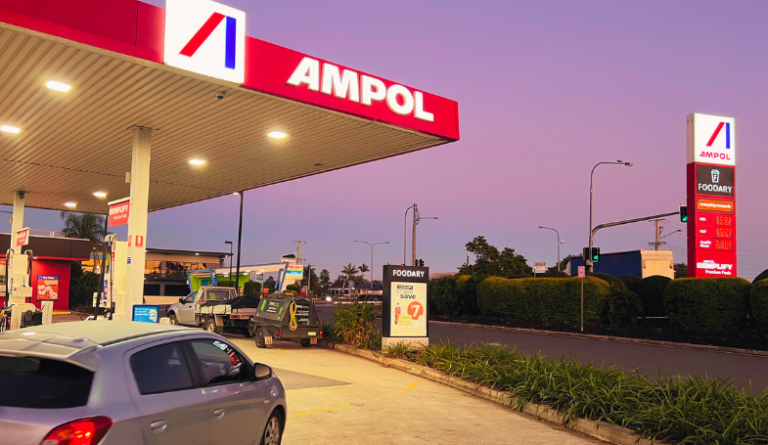
If fuel prices are dropping and a retailer is slow to adjust, customers may bypass their station for a competitor that already lowered its price. On the flip side, if prices are rising and it takes hours to update, the retailer loses valuable margin on every gallon sold at the old price.
Automation: The key to faster pricing
Automating implementation removes the lag between decision-making and execution. Instead of waiting for manual approval, fuel prices can be sent instantly from fuel pricing software systems to pumps and signs, keeping stations competitive in real time.
The benefits of speed in fuel pricing
- More volume – Lower prices applied quickly attract more customers before competitors catch up.
- Higher margins – When prices rise, faster updates mean less revenue lost to outdated pricing.
- Fewer errors – Automation reduces manual input mistakes and ensures accuracy.
Balancing automation and control
Fuel pricing teams may hesitate to fully automate price updates, but automation doesn’t mean losing control. Smart auto-implementation allows retailers to set clear rules and safeguards, ensuring that only approved price changes are applied instantly.
Conditions, rules, and validation are the key to controlled auto-implementation.
Automation can’t replace human input and the brain power of your team — and it’s not trying to. Its job is to replicate those repeatable processes that your team do day in and day out, to take care of those standard pricing decisions so you can focus on the more complex cases.
To do this, you need to set the right validation rules. Establish your rules by working through the process that your team would typically follow, to create a set of robust conditions that will reflect that decision making process ― from delta to competitor strategies, to margin or decimal place adjustments, and everything in between.
Prices won’t qualify to be auto-implemented unless they’ve met all the conditions that you’ve set.
With safeguards in place to notify you when prices aren’t suitable, and need human input, you can be sure that your pricing decisions are appropriate — and implemented at speed.
Trusting automated pricing may feel like a big leap, but the cost of hesitation is high. Speed matters in fuel retail, and auto-implementation ensures retailers aren’t leaving money on the table.
For over 40 years Kalibrate Fuel Pricing has helped fuel retailers to make and execute successful pricing decisions at speed.
Further reading:
Use this quick and easy calculator to determine how much more you could make by adopting auto-implementation at your network.