Gasoline:
Retail gasoline prices decreased 1.0 cents per litre to 184.3 in August
Retail gasoline prices in Canada changed very little from the end of July to the end of August, declining just 1.0 cents per litre. Compared with the end of July, the crude component of the pump price fell 0.3 cents per litre, adding some stability to retail pump prices in a year of volatility. Vessel movement through the Strait of Hormuz changed little in August, with the strait remaining mostly blocked as both sides in the Middle East war appear to be in a stalemate. However, compared with a year ago, retail pump prices in Canada ended August 37.9 cents per litre higher. The crude component accounted for 21 cents per litre of the increase, a consequence of disruptions to crude flows from the Middle East conflict. The refining margin, also known as the crack spread, was 24 cents per litre higher, driven by unusually low North American gasoline inventories, despite refineries running near full capacity throughout the summer.
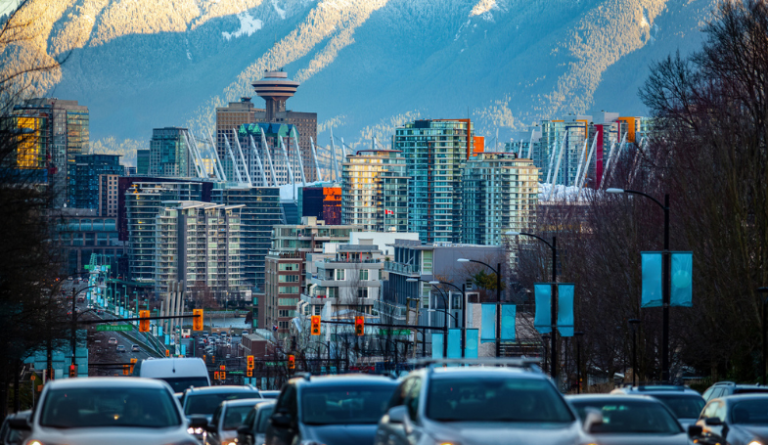
In August, regional disparities in gasoline price movements were evident, with some markets seeing prices rise while others recorded declines. The largest price increase occurred in Vancouver, British Columbia, where prices rose 9.3 cents per litre over the month, ending the month at 218.0 cents per litre, the highest in Canada. In contrast, prices in Brandon, Manitoba, fell substantially in August, declining 38.7 cents per litre, the largest decline among our surveyed markets, and ending the month at 143.2 cents per litre, the lowest in Canada.
Diesel:
Retail diesel prices increased 6.2 cents per litre to 236.8 in August
Retail diesel prices in Canada rose 6.2 cents per litre from the end of July to the end of August. Wars abroad have severely affected global diesel fuel inventories. Attacks by Ukraine on Russian oil infrastructure have reduced Russia’s ability to produce diesel fuel, prompting an export ban. Similarly, the Middle East conflict has affected refiners’ ability to get product to market. Consequently, despite North American refineries running at near full capacity throughout the summer, strong export demand has limited refiners’ ability to build inventories. As a result, the diesel refining margin, or crack spread, expanded in August, reaching an all-time high of 119.4 cents on August 19.
In August, most surveyed markets saw diesel prices rise, with the largest increase in Whitehorse, Yukon, where prices rose 20.0 cents per litre over the month. However, some markets saw price declines, with the largest in St. John’s, Newfoundland, where prices fell 6.6 cents per litre over the month. By the end of August, Vancouver, British Columbia, had the highest diesel prices at 268.4 cents per litre. In contrast, Prince Albert, Saskatchewan, had the lowest diesel prices at the end of August, at 197.9 cents per litre, the only market showing prices below two dollars a litre.
—
Kalibrate Canada conducts a daily survey of retail gasoline, diesel, propane, and furnace fuel prices in 77 Canadian cities.
Canadian petroleum prices are available for download and display using a variety of analytic tools on this website: Charting.kalibrate.com