Everybody loves a comeback story, whether it’s Rocky beating Ivan Drago in the 15th round, or the Karate Kid prevailing over Johnny Lawrence in the All-Valley Tournament.
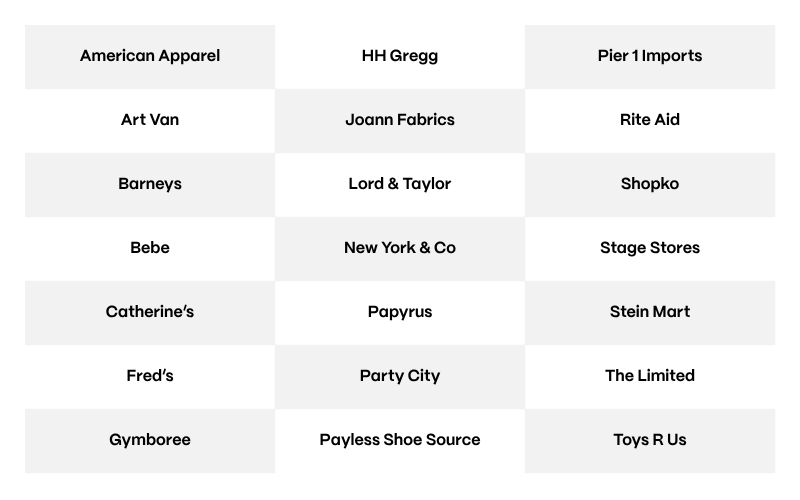
The retail landscape in the US is filled with a lot more failures than comebacks over the past 10 years, including the following chains that have closed all their brick-and-mortar locations.
Back from the brink: Three iconic brands return
FAO Schwarz
FAO Schwarz is a well-known toy store, which catapulted to national fame when Tom Hanks played the dance-on piano in the FAO Schwarz store on Fifth Avenue in the movie “Big”. FAO Schwarz expanded nationally in the early 2000s and had opened 40 stores throughout the US. but seemed to attract more window shoppers than actual buyers. Most of the stores have since closed or been relocated, with five flagship stores open today (New York, Milan, London, Beijing, and Dublin) and select FAO Schwarz toys available at Target stores.
FAO Schwarz and Nordstrom have announced a partnership that will bring the toy store’s offerings into all Nordstrom department stores. In addition, eight stores will feature “The Jewel Box”, a store-within-a-store concept including branded activations and live toy demonstrations.
From this writer’s perspective, the Nordstrom/FAO Schwarz partnership makes good sense. Nordstrom has no ambitions to become a dominant toy retailer – FAO Schwarz’s high-end image will complement Nordstrom and provide them with the opportunity to provide another merchandise offering to their customer base. This partnership is quite the opposite of Macy’s bringing Toys R Us into their store – Toys R Us was a low-priced category killer whose image in no way complements a conventional department store.
Bed Bath & Beyond
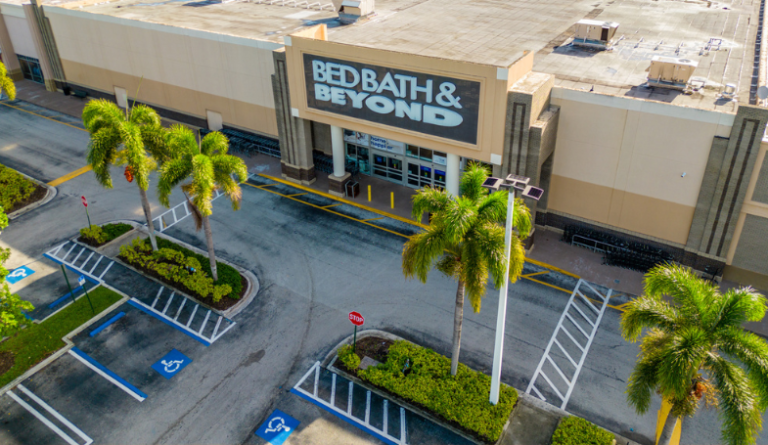
Bed Bath & Beyond was the dominant home furnishings chain in the US prior to closing all of their retail stores in 2023. Earlier this year, the parent company of Bed Bath & Beyond made an offer to purchase The Container Store and plans to co-brand all ~100 The Container Store units with Bed Bath & Beyond. The result may well be a phoenix-like resurrection of the brand, and its re-emergence as a dominant retailer in the home furnishings space.
In addition to retail products, Bed Bath & Beyond recently made an agreement to acquire Fathom Holdings Inc., a real estate service platform integrating residential brokerage, mortgage, title and insurance offerings. Fathom’s real estate brokerage services are a B2B play, but their mortgage, title, and insurance offerings could be an attractive offering to their home-owning customer base. Other retail chains have successfully added services to their product mix, including Costco (health services, travel services, and selected insurance offerings) and home improvement retailers Home Depot and Lowe’s (installed services).
One recent announcement by Bed Bath & Beyond is a stroke of genius – they will accept any coupon (regardless of age) between June 22 and July 13, 2026. While the timeframe is short enough (and they currently have relatively few stores) that this will likely not pose a significant hit on their bottom line, it has generated positive publicity.
Overall, Bed Bath & Beyond is the most exciting brand resurrection story of the year.
Party City
Party City closed all of its stores in the continental United States in late 2024, after a 38-year run. The brand has recently been resurrected as a store-within-a-store concept in Staples units, featuring their offering of helium-filled balloons. This seems like a last-ditch effort for Staples to find new customers – it’s hard to see the synergy between Staples’ core office supply offerings and party supplies.
The comeback formula
Whether a brand lands on the list above or writes its own comeback story usually comes down to one thing: knowing where to be, who the customers are, and what each market can truly support. The brands that stumbled often over-expanded into markets that couldn’t sustain them or chased locations that never matched their customer base.
Every comeback runs into the same questions – which locations can carry the brand, where trade areas overlap, how much a new store cannibalizes an existing one, and where the real whitespace is. That’s precisely what Kalibrate helps retailers figure out, combining sales forecasting, cannibalization modeling, and white space analysis so growth decisions are built on data, not instinct. The best comeback stories aren’t lucky – they’re planned