A market reset, not a post-COVID story
Spain’s dining culture hasn’t fundamentally changed. People still eat late, value social occasions and return to trusted local establishments. Yet since 2022, inflation, rising expectations and the growth of fast casual concepts have changed how, when and where consumers spend their money.
Menu prices rose, guests became much more conscious of value, and operators had to reconsider the relationship between price, quality and frequency. At the same time, delivery and takeaway solidified their role as everyday channels rather than temporary fixes.
The article draws on conversations with Thomas Kremer, Chief Growth Officer at Emerging Bites and former Vice President, International Development EMEA at CKE Restaurants. His experience developing restaurant and franchise businesses across Europe provides a useful lens on what has changed in his home market of Spain.
The rhythm remains, but the occasions are changing
Spain’s eating rhythm has not fundamentally changed. Late lunches, late dinners and sharing remain central to dining culture, but consumers are becoming more flexible in how they eat throughout the day.
- Snacking, takeaway lunches and international concepts have become more common, especially in larger cities.
- Burgers, poke, Asian cuisine and brunch now sit comfortably alongside traditional dining occasions.
- The menú del día remains important, but rising costs and increased competition are putting pressure on the weekday lunch occasion.
Breakfast remains a notable exception. Coffee and toast at the local bar is still a deeply ingrained habit, creating a high-frequency occasion that can drive repeat visits and loyalty for operators.
Fast casual has changed perceptions of chains
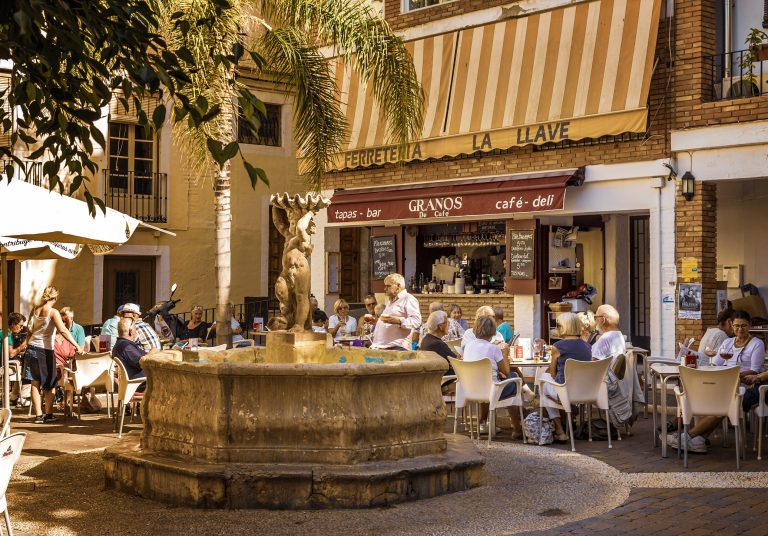
Spain has never had a stigma around casual eating. Bar and tapas culture are casual by nature. The resistance was historically directed at chains, which were often associated with standardized fast food rather than “real food.”
Fast casual has helped break down that distinction. Premium burger brands, healthy bowl concepts and a new generation of Spanish operators have shown that chains can still deliver quality, atmosphere, and a strong brand experience. Consumers increasingly judge the proposition on the experience rather than the ownership model, and the line between dine-in, fast casual and QSR is becoming less defined.
Premiumization now sits alongside value. Guests want better ingredients, stronger design and a more enjoyable experience, but they remain highly price conscious. Health and protein-led menus have also moved closer to the mainstream, complimenting rather than replacing burgers and comfort food.
International brands cannot simply copy and paste
The opportunity is attractive, but Spain is not a market where an international operator can simply reproduce its home-market model. Meal times and dayparts are different, sharing matters, and the competitive set is unusually broad.
Key considerations include:
- The real competitor may be the local bar rather than another chain
- Breakfast cannot be treated as an afterthought
- Terraces can be central to a site’s appeal
- The wrong franchise partner, rent structure or expansion pace can quickly undermine an otherwise strong brand.
The more resilient route is to:
- Build around Spanish timing and social habits
- Win weekday lunch on value
- Take coffee and breakfast seriously
- Prove the model through a small number of company-run units before accelerating expansion
- Use digital tools to improve service and efficiency, while treating delivery as an additional channel rather than the foundation of the business
Success comes down to location, audience and context
A strong concept still needs to be in the right place.
- Performance begins with understanding who is nearby, how they move and what they need at different times of day.
- Office-heavy areas place greater emphasis on lunchtime speed.
- Residential neighborhoods can support breakfast, coffee and repeat local visits.
- Tourist districts and mixed-use locations have a different balance of familiarity, visibility and theatre.
Demographic and behavioral profiling helps explain the demand around an existing or potential location. That means looking beyond resident population to workers, families, visitors and tourists, then understanding how those groups use the area across the day and week.
The competitive and co-tenancy context matters too. A traditional Spanish plaza, a modern shopping centre, an urban high street and a mixed-use development can each generate very different customer missions. The surrounding brands, anchors, transport connections and pedestrian flows all influence whether a proposition fits.
Trends inform decisions, but fundamentals drive performance. Health-led menus, premium positioning and digital ordering can shape the format and offer, but they cannot compensate for a mismatch between concept, audience and location.
Who is doing well, and who is worth watching?
Rather than rank the market, it is more useful to look at the different models that are gaining traction and what each one tells us.
Making “real food” scalable

Honest Greens represents the health-focused, quality-led end of fast casual. Its proposition combines market plates, bowls, breakfast, specialty coffee and an app-based loyalty programme. Its current location list spans cities in Spain, Portugal, France and the UK, showing how a Spanish-born concept can travel while maintaining a clear identity.
A focused international proposition

Five Guys demonstrates that an international premium QSR offer can translate well in Spain when it remains clear and consistent. The brand’s Spanish menu emphasizes burgers made to order, hand-prepared toppings and freshly cooked fries. It is a relatively simple proposition, but the product and brand cues are unmistakable.
Small, focused and deliberately scarce

Pink’s!! is the smaller concept to watch. Its own positioning is built around limited quantities, burgers fresh daily and smashed to order, using the line “until sold out”. The approach gives the brand a distinctive sense of freshness and scarcity. It is a useful counterpoint to larger chains because it shows how a tightly controlled menu and a memorable service proposition can create attention without trying to offer everything.
Together, these examples illustrate three different routes to relevance: a scalable Spanish fast casual brand, an established international operator with a sharply defined offer, and a smaller local concept using focus and scarcity to stand out.
What comes next
The Spanish market is unlikely to be defined by a single winning format. Digital ordering, loyalty programs and smarter menu engineering will continue to help operators improve efficiency while protecting value perception. Health, freshness and protein-led choices are becoming part of the mainstream, while premium casual dining continues to gain ground.
Some much-hyped concepts have proven less transformative than expected. Dark kitchens, ultra-fast delivery and restaurant automation have not translated evenly into durable business models. By contrast, stronger loyalty programs, better use of data and a clearer balance between value and experience are already shaping the market’s most successful brands.
Spain’s culture remains the anchor. The brands most likely to succeed will be those that respect local dining habits, understand the social role of eating out and adapt their proposition to the location. The market is evolving, but on distinctly Spanish terms.