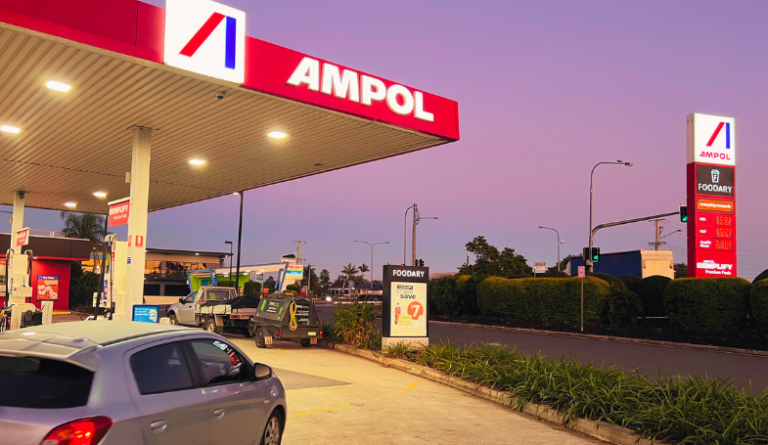
The new reality for Australian fuel retailers
In recent weeks, Australians have watched national average petrol prices jump sharply as global conflict disrupts supply routes and tightens seaborne oil flows.
Government moves to release emergency supplies and temporarily relax fuel standards underscore that this is now a declared “national crisis”, not a routine price cycle. Regional sites in particular are experiencing localized outages and extreme demand spikes, with some locations seeing sales more than double as panic buying sets in.
Behind the headlines, wholesale prices are whipsawing day to day, while terminal gate prices are adjusting with slightly longer lags as suppliers try to smooth volatility between international benchmarks and the local market. Fuel rationing and tighter supply scenarios are now being openly discussed, turning every cent on the pole sign into a strategic decision.
Why volatility is punishing “manual” pricing
Most Australian networks still rely on a mix of spreadsheet models, rules of thumb, text messages and phone calls to set and change prices across their sites. In a high-volatility environment, that approach creates several structural problems for retailers:
- Reaction time: When international benchmarks and terminal gate prices move multiple times a week, manually updating boards guarantees that many sites are out of position for hours or days.
- Inconsistent strategy: Different territory managers interpret “market moves” differently, leading to fragmented price positions and cannibalization between nearby sites.
- Thin-margin blindness: With wholesale costs jumping and falling, it is easy to under-recover costs on some products and sites while over-pricing in others, bleeding volume where it matters most.
- Compliance and trust risk: In a tense environment, regulators are highly alert to perceived gouging, while consumers notice even small mismatches between street price, pump price and app listings.
Volatility does not just increase risk; it magnifies the cost of slow or poorly informed decisions.
The gap between a best-in-class and an average pricing response is broadening.
Turning disruption into a margin strategy
Leading retailers globally have used similar crises to rewire how they price, moving from reactive discounting to data-driven, site-level optimization. The core shift is from asking “What are others doing?” to “What is this specific site worth, right now, in this micro-market?”
That playbook in the Australian context has three pillars:
- Real-time market intelligence
Pricing teams need an integrated view of international benchmarks, terminal gate pricing movements, freight and tax changes, competitor positions and local demand – in one environment, not across half a dozen systems. The goal is to see cost and competitive shifts as they happen, rather than days after the fact.
- Predictive and prescriptive analytics
Instead of simple cost-plus rules, advanced engines model price elasticity by site and product, forecast demand, and simulate different price points before a single cent is changed on the pole sign. In a week like this, that means understanding which sites can hold price and protect cents-per-litre, and which must move quickly to defend strategic volume.
- End-to-end pricing execution
Once a price decision is made, it must flow automatically to POS, pumps, signs, apps and websites, with full auditability. That removes manual errors, shortens reaction time from hours to minutes, and ensures what customers see is what they pay – a critical factor when trust is fragile.
What next-generation fuel pricing software should deliver
The current Australian crisis is, in many ways, a blueprint for what modern fuel pricing capability should look like.
Retailers evaluating solutions should demand:
- Embedded data science: Models that continuously learn from local demand, competitor moves and historic cycles, rather than static rules maintained in spreadsheets.
- Australian-specific workflows: Support for terminal gate pricing based buying, local tax structures, wet-stock realities and regional price cycles, so teams are not forcing global software to fit local practice.
- Network-wide visibility with site-level nuance: A single view of price position, margin and volume risk across every site, with the ability to drill into a single grade on a single forecourt.
- Scenario planning: Tools to test “what if” pricing tactics need to be amended if oil spikes again, reserves are tightened, or rationing is introduced, so the board sees quantified impacts and options, not just narratives.
- Tight integration to execution systems: Seamless links to POS, pump controllers and digital signage so that a strategy decision in head office is reflected on the pole sign within minutes.
In periods of stability, these capabilities can quietly add a few tenths of a cent per litre in margin and shave labour out of the process. In a crisis like 2026, they can be the difference between defending profitability and watching it evaporate in the spread between wholesale cost and street price.
Australia will face fuel shocks again – whether from geopolitics, shipping disruptions or domestic policy shifts.
Fuel retailers that treat this crisis as a catalyst to build a modern, analytics-driven pricing capability will emerge stronger, more trusted by customers and far better positioned to turn future volatility into a sustained competitive advantage.
Sources:
- ABC News “Fuel rationing a chance in Australia if war continues to trim global oil supplies” 16 March 2026
- SBS News “Here’s what Australia’s fuel supply looks like in charts” 12 March 2026
- Reuters “Australia to temporarily ease fuel standards to boost supply” 11 March 2026
- ABC News “Fuel panic is spreading and now Australia is tapping into its emergency supplies” 13 March 2026
- Argus Media “Australia’s TGP lag slows on fuel price volatility” 16 March 2026
- ACCC “ACCC keeping a close eye on petrol market amid Middle East conflict” 5 March 2026
- Macquarie University Lighthouse “What happens when Australia’s 36-day petrol supply runs out?”
- Dynamic Business “Middle East conflict sends fuel costs higher as watchdog warns retailers to play fair” 8 March 2026