Lessons from New Zealand’s unmanned revolution
New Zealand has been the test bed for low-cost, unmanned formats, with independents like Gull and Waitomo building dense networks of self-service, fuel-only sites that run on a low-overhead, pay-at-pump model. Gull, for example, now operates a largely unmanned network and moves around eight % of New Zealand’s liquid fuel volume, proving that a discount, no-frills proposition can scale nationally.
These challengers have consistently undercut the majors on price, drawing volume away from traditional full-service brands such as Z Energy, bp and Mobil, and creating what’s often referred to as the “discount e=ect” in local price cycles. The result has been sustained market share pressure on legacy networks and a structural reset of consumer expectations around what “normal” pump prices should look like in highly contested postcodes.
Z Energy’s U-GO: incumbent fights back with its own disrupter
Rather than cede the value end of the market, Z Energy has responded by introducing U-GO, a no-frills, unstaffed brand positioned directly against the independents. Former Caltex and Z sites are being rebadged as U-GO, stripping out the store and labor cost to deliver a simple, cut-price fuel offer under a separate banner.
This dual-brand strategy allows Z to hold a premium, full-service offer under the Z fascia while simultaneously competing in the discount segment through U-GO, effectively playing on both sides of the price ladder. In practice, that means consumers now choose less between brands and more between formats: staffed plus shop or unmanned plus savings.
Do consumers really value the store?
Unmanned growth in New Zealand has exposed a hard truth: for a significant portion of motorists, the shop is optional, but a sharper pump price is non-negotiable. Price-sensitive commuters, fleets and regional customers have flocked to unmanned sites that offer 24/7 access, fast in-and-out refueling and consistently lower prices, even when there is no coffee, food or loyalty interaction.
At the same time, premium formats have continued to perform where there is a strong food, coffee or services proposition, suggesting the market is bifurcating into “experience” and “efficiency” missions rather than converging on a single model. The challenge for incumbents is to stop treating convenience as universally valued and start aligning site formats to the specific missions and catchments they serve.
Ampol and U-GO: New Zealand playbook comes to Australia
With its acquisition of Z Energy, Ampol now owns both a mature New Zealand operation and the U-GO brand, and it has moved quickly to test that model in Australia. By early 2026, Ampol had converted 27 Australian sites to U-GO and was operating 46 unmanned U-GO locations nationally, with sites showing around a 50 percent uplift in fuel volumes and an average earnings improvement of roughly $350,000 per site after 12 months.
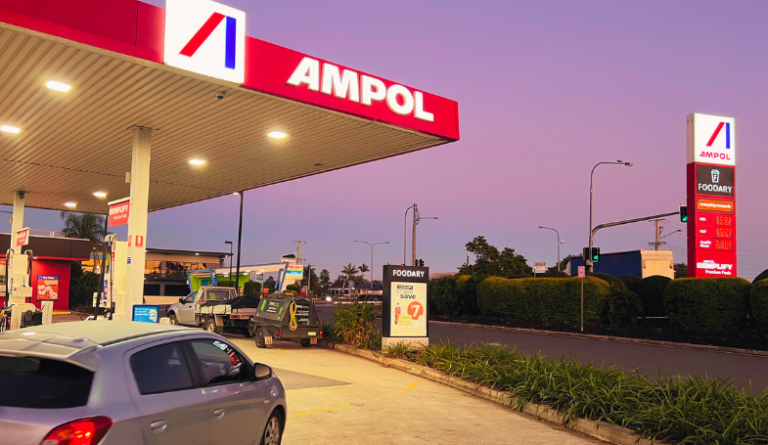
These U-GO sites are pay-at-pump, card-only, fuel-only locations designed to target the value end of the market, while Ampol’s core network continues to push a full-service Foodary-style convenience o=er at the other end. This shift toward unmanned formats highlights how automation is moving from niche trial to mainstream strategy in Australian fuel retail, as operators respond to changing consumer behaviour and rising operating costs.
What this means for Australian fuel retailers
The New Zealand experience shows that once unmanned fuel reaches meaningful scale, it can permanently re-anchor price expectations and accelerate share shift away from traditional, fully staffed formats. Ampol’s early results indicate that unstaffed sites in Australia can materially lift volume and earnings, even without promising across-the-board price discounts, simply by lowering cost to-serve and sharpening local competitiveness.
For the rest of the Australian market, the strategic questions are urgent: which parts of the network should migrate to unmanned, how do you protect high-margin convenience missions, and what portfolio balance between “experience” and “efficiency” will win in each catchment.
If New Zealand is any guide, players that delay their unmanned strategy risk discovering too late that consumers have already decided they’re willing to trade the shop for cheaper, quicker fuel, and that a new generation of low-cost competitors has moved in to capture that demand.